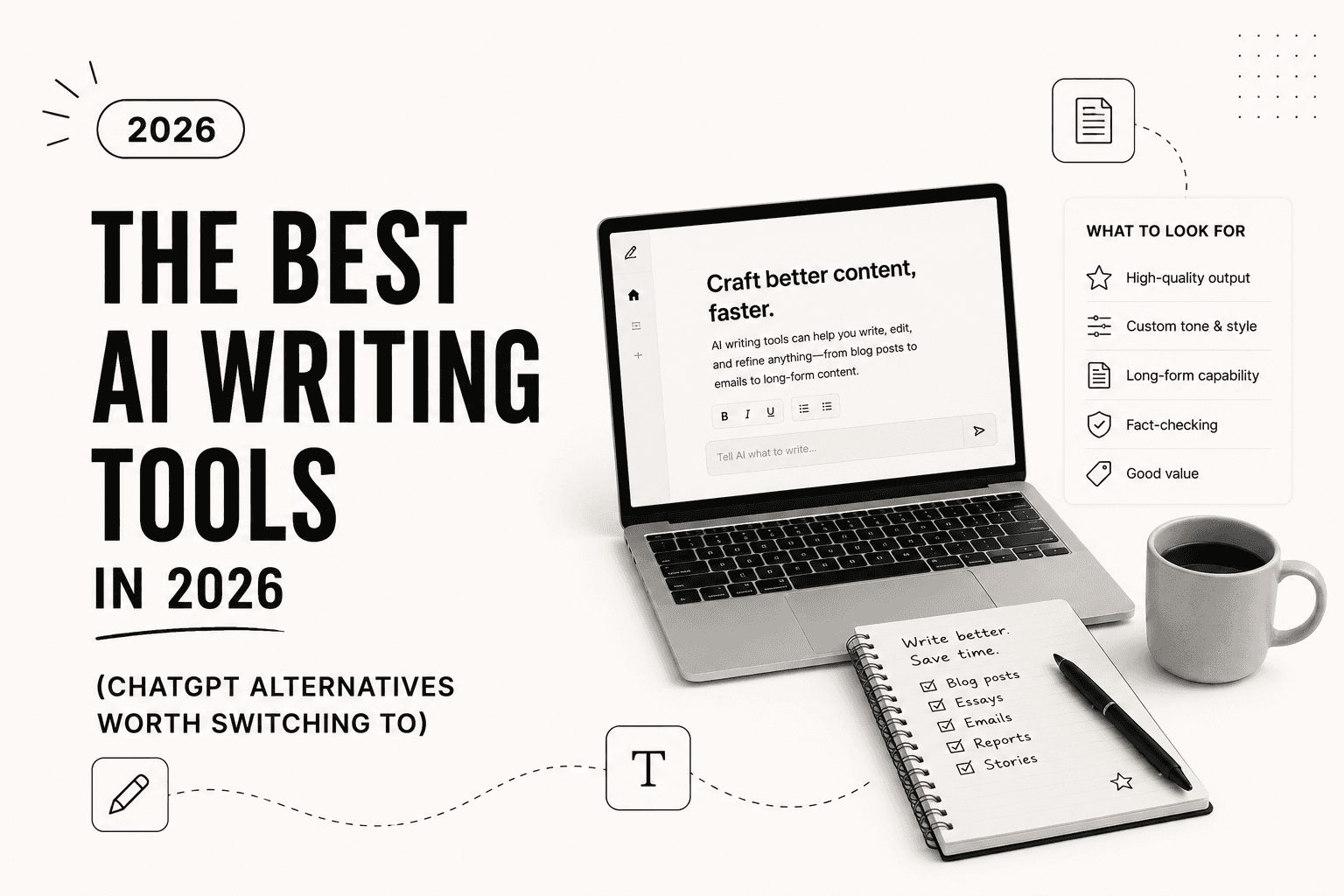
The best AI writing tools in 2026 (ChatGPT alternatives worth switching to)
Seven AI writing tools that beat ChatGPT at specific jobs, from long-form drafting to marketing copy to editing your own voice. Which one fits your work, and why.
By The Daily Query · · 3 min read
 query://tools
ChatGPT is a great generalist and a mediocre specialist, which is fine until you use it for the same job every day. I noticed I kept fighting it. Rewriting the same instructions, deleting the same throat-clearing intro, coaxing it away from the same three-part sentence structure it loves. At some point I asked the obvious question: is there a tool built for the one thing I actually do?
There usually is. The AI writing space quietly split into specialists while everyone was staring at the big chatbot. Some tools draft long form better. Some nail short marketing copy. One is basically a grammar editor with a brain. Using the right one feels less like prompting and more like handing work to someone who already knows the brief.
I tried the popular ones on real deadlines, not demos, and kept the seven below. Each entry says what it beats ChatGPT at, because "it also writes" is not a reason to switch. If you write for a living or a side income, one of these will quietly become your default.
Claude
Claude is my main writing tool now, full stop. It holds a longer thread of reasoning, it pushes back when a draft is weak instead of flattering it, and it sounds less like a press release out of the box. For long articles and anything that needs an actual argument, it is the one I reach for first.
Jasper
Jasper is built for marketing teams, and it shows. Brand voice settings, templates for ads and emails, and a workflow that assumes you are producing volume on a schedule. Overkill for a hobbyist, genuinely useful if copy is your job and consistency across a team matters.
Copy.ai
Copy.ai is the fast-food version of Jasper, and I mean that as a compliment. You need forty ad variations by lunch, you paste a product description, you get forty angles to sort through. It is a brainstorming engine more than a finisher.
Sudowrite
Sudowrite is the one fiction writers actually like, which is rare. It suggests where a scene could go, rewrites a paragraph in a different register, and does not panic when you ask for something weird. If you write stories rather than articles, nothing else on this list understands you.
Grammarly
Grammarly grew from a spell-checker into a real editor. It now rewrites for tone and clarity, not just commas. I do not draft in it, but I run almost everything through it before it goes out, because a second pass catches the sentence I have read so many times I stopped seeing it.
Rytr
Rytr is the budget pick. It is not the sharpest tool here, but it is cheap and covers the common formats, which makes it a reasonable starting point if you are testing whether AI writing fits your workflow before spending real money.
Notion AI
Notion AI wins on location. If your notes, docs, and drafts already live in Notion, having a competent writer inside the same page beats copying text between tabs all day. It is not the best writer here, but it is the least friction.
What I would actually do
Pick by the job, not the hype. Long form and argument, use Claude. Marketing volume, Jasper or Copy.ai. Fiction, Sudowrite. Final polish on everything, Grammarly. You do not need a stack of seven, you need the one that matches the thing you write most.
Start with the free tier of whichever fits, write one real piece in it, and notice whether you are fighting it or flowing. That feeling tells you more than any feature list. If you are pairing writing with a channel, the faceless YouTube stack shows where scripts fit into the pipeline.
enjoyed this one?_
Get the next one in your inbox.
One email every morning. The best AI tools, reviews, and reads, decoded in five minutes.
up_next → Tools
Google Is Killing the Gemini CLI for 'Antigravity.' I Just Wrote a Guide to It.
Four days after I walked through installing the Gemini CLI, Google is retiring it for a new Antigravity CLI. The migration is annoying. The part that should bother you is what changed underneath.