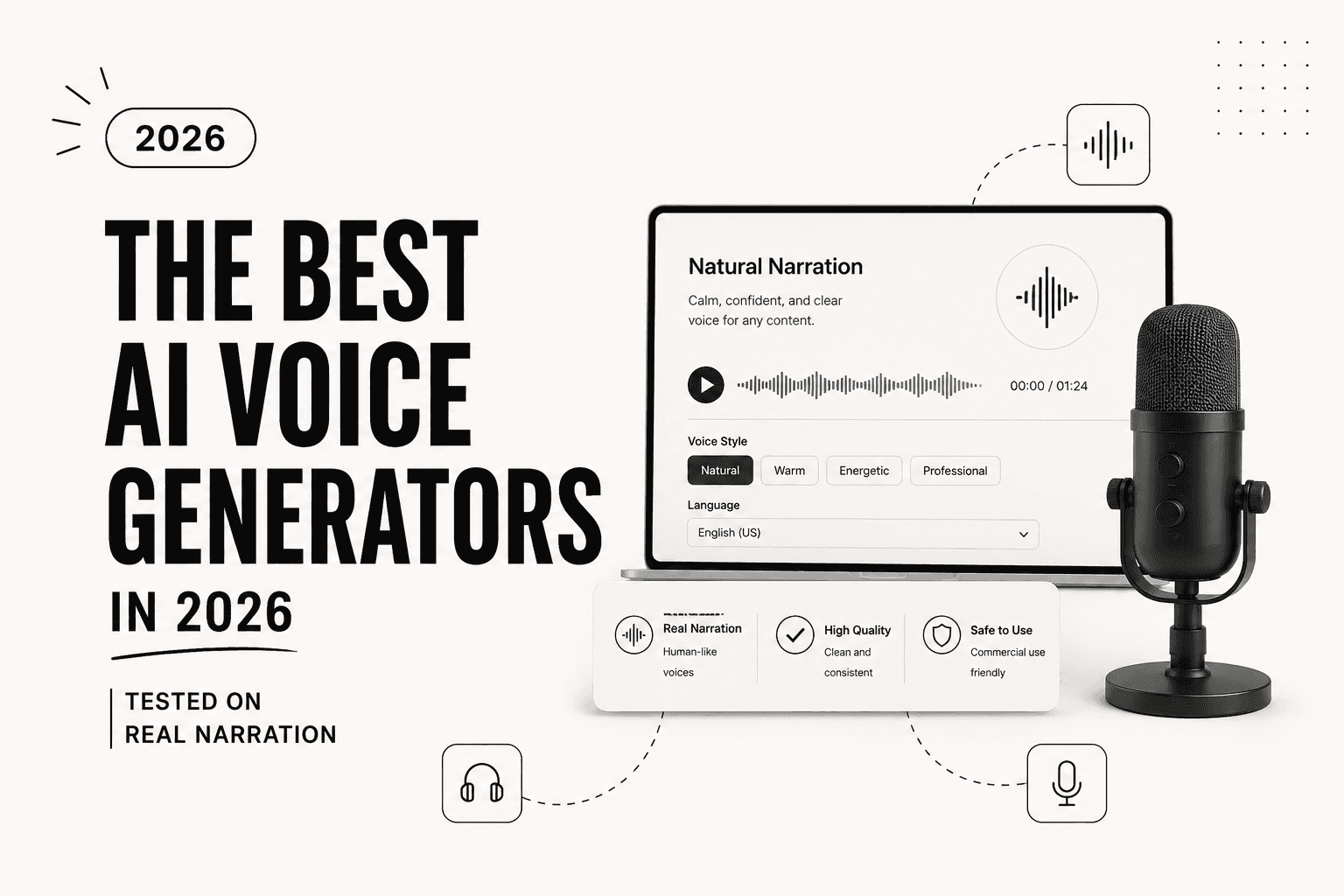
The best AI voice generators in 2026, tested on real narration
ElevenLabs, PlayHT, Murf and more, judged on whether they still sound like a computer. The best AI voice tools for narration, audiobooks, and video.
By The Daily Query · · 3 min read
 query://tools
There is a specific moment when synthetic voice stops being a novelty and starts being useful, and it is the moment you forget you are listening to one. A year or two ago that almost never happened. The pauses were wrong, the emphasis landed on the wrong word, and your ear flinched every few seconds. Now, with the good tools, I sometimes catch myself a full minute in before I remember nobody actually recorded this.
That said, the gap between the best and the rest is wide, and it is easy to pick a cheap option that undoes all your other work. A flat, slightly robotic narrator will drive viewers away faster than a shaky script, because it feels off in a way people cannot name but definitely notice. This is a place where the quality difference is worth paying for.
I fed the same paragraph of narration into each of these and listened for the tells: breath, pacing, and whether emphasis fell where a human would put it. Here is how they ranked, and which one fits which job.
ElevenLabs
ElevenLabs is the current benchmark, and it is not close for expressive narration. The voices breathe, the emotion is adjustable per line, and the voice cloning is good enough to raise real ethical questions. For anything a listener will sit with for minutes, this is the one.
PlayHT
PlayHT is the strongest challenger, especially for long-form. The library is huge, the quality is very close to the leader, and the pricing tends to favor people producing a lot of audio. If you narrate volume, it is worth comparing side by side against the top pick.
Murf
Murf is aimed at business and presentation work, and it fits that lane well. Clean studio voices, a built-in workflow for syncing narration to slides, and team features. Less about emotional range, more about a professional read for training videos and demos.
Play.ai and OpenAI voices
The voices baked into the big chatbot ecosystems keep improving, and for quick drafts or interactive use they are convenient. They are not yet my choice for a polished final narration, but for prototyping how a script sounds, they are right there and fast.
WellSaid
WellSaid targets corporate narration with a focus on consistency and licensing clarity, which matters if you are producing branded audio at scale and need to know exactly where the voices came from. Narrower than the others on purpose.
Speechify
Speechify comes at this from the other direction, reading text to you rather than producing content. If your need is listening to articles and documents rather than publishing audio, it is the one built for that, and it is genuinely good at it.
Where I would spend
For creator work, narration, and audiobooks, ElevenLabs earns the money, with PlayHT as the value comparison if you produce a lot. For corporate and training audio, Murf or WellSaid. For consuming rather than creating, Speechify. Pick one voice you like and stay with it, because a consistent narrator is part of how an audience recognizes you.
Run the same fifteen seconds of your actual script through two of these before deciding. The one that makes you forget it is synthetic is the one worth paying for. If you are building the rest of the pipeline, the faceless YouTube stack shows where voice fits with script and visuals.
enjoyed this one?_
Get the next one in your inbox.
One email every morning. The best AI tools, reviews, and reads, decoded in five minutes.
up_next → Tools
The best AI resume builders in 2026 (and how to not sound like a robot)
AI resume builders tested against real job applications and applicant tracking systems. Which ones get past the filters, and where a human still has to step in.