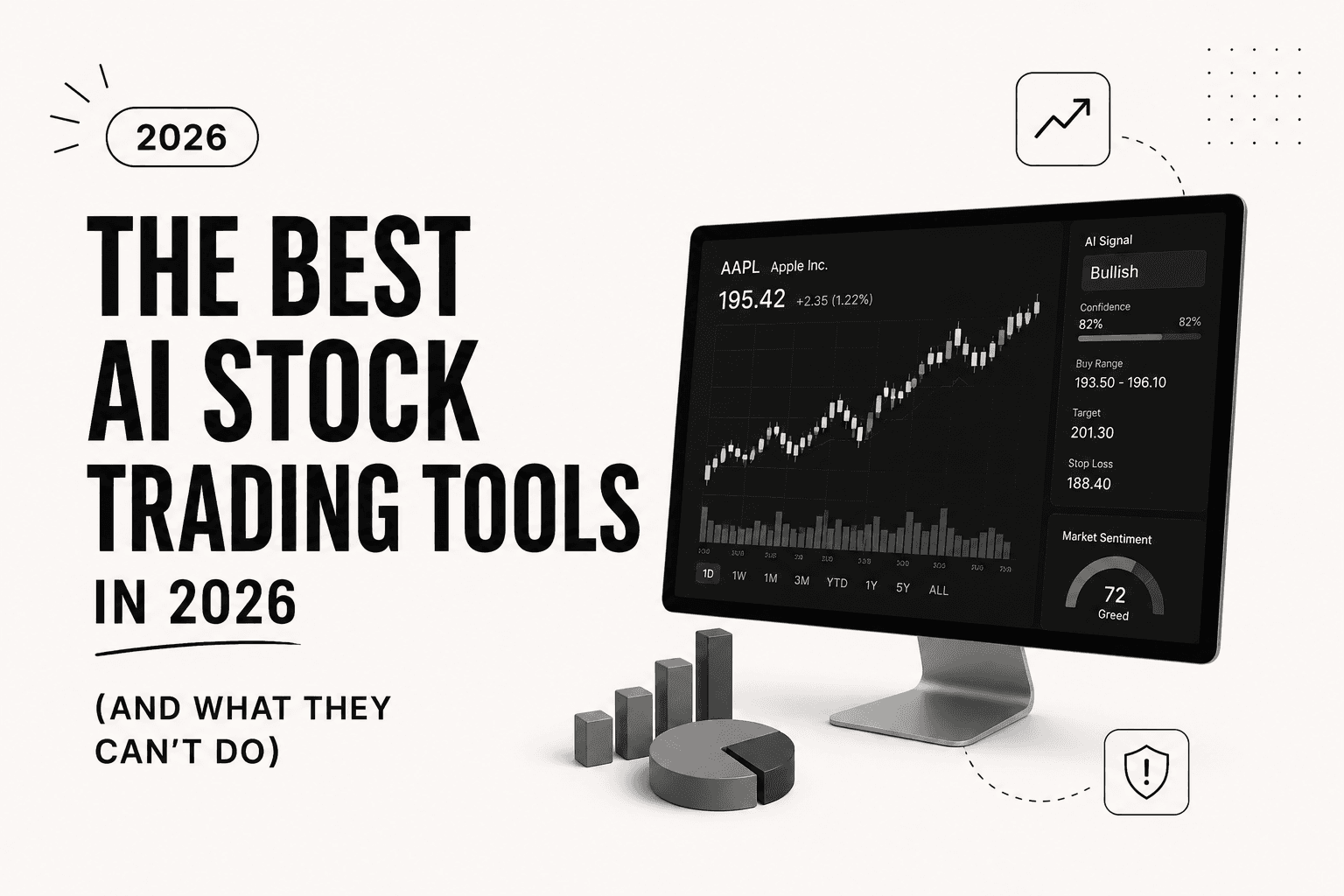
The best AI stock trading tools in 2026 (and what they can't do)
AI tools for stock research, screening, and analysis, reviewed with a clear head. What they genuinely help with, and the promises you should walk away from.
By The Daily Query · · 3 min read
 query://tools
I want to start with the disclaimer that most articles like this bury at the bottom, because it changes how you should read everything after it. No AI tool knows what a stock will do tomorrow. If one did, the people who built it would be quietly using it, not selling you a subscription. Markets price in information fast, and "AI that predicts the market" is the oldest sales pitch in a new outfit.
What AI genuinely helps with is the grunt work around a decision you still make. Reading a two hundred page filing in seconds. Screening thousands of companies against your own rules. Summarizing an earnings call while it is still happening. That is real leverage, and it is completely different from a black box telling you to buy. One saves you hours, the other separates you from your money.
So this list is organized around research, not prophecy. Everything here helps you understand faster or watch more at once. None of it removes the part where you think, and anything that claims to should be closed immediately. This is not financial advice, it is a tour of what the tools actually do.
Bloomberg and its AI layer
At the professional end, the terminal's AI features summarize filings, transcribe and query earnings calls, and surface relevant news fast. It is priced for institutions, but it sets the bar for what "AI research assistant for markets" actually means when done seriously.
Koyfin
Koyfin is the accessible version of that idea. Deep financial data, clean visualizations, and increasingly smart summaries, at a price a serious individual investor can stomach. I use it to compare companies quickly without drowning in spreadsheets.
Danelfin and similar scoring tools
Tools that assign AI-driven scores to stocks are fine as one input and dangerous as a command. Treat the score as a starting question, not an answer. The moment you buy because a number told you to, you have handed your judgment to a model you cannot inspect.
Perplexity Finance
For research, an answer engine that cites its sources is a genuinely useful first stop. Ask it to summarize the bear case on a company and it will pull real arguments with links, which you then verify yourself. The citations keep you honest.
ChatGPT and Claude for filings
The big chatbots are excellent at turning dense financial language into plain English. Paste a section of a 10-K and ask what the risk factors actually mean. They are research aids, not advisors, and they will occasionally be confidently wrong, so verify anything that would move your money.
Composer
Composer lets you build and backtest rule-based strategies without writing code, which is a clean way to test an idea against history before risking anything. Just remember that a backtest is a story about the past, and the market has read that story too.
The only edge that lasts
Every tool here gives you the same thing: more information, faster. That is worth a lot, and it is not an edge by itself, because everyone else has the same tools now. The edge was always temperament, the boring discipline to have a process and not abandon it when a headline scares you.
Use AI to do the reading, run the screens, and summarize the calls. Then make the decision yourself, sized so that being wrong is survivable, because sometimes you will be. If you are drawn to the finance niche for other reasons, the make money online piece covers building content around it, which is a steadier bet than trading it.
enjoyed this one?_
Get the next one in your inbox.
One email every morning. The best AI tools, reviews, and reads, decoded in five minutes.
up_next → Tools
The best free AI tools for students in 2026 (that won't get you in trouble)
Free AI tools that actually help students study, research, and write, used the honest way. The ones worth your time, and the line between help and cheating.